Botox in New York City is a non-surgical injectable treatment that temporarily relaxes targeted facial muscles to soften movement-related wrinkles. It uses botulinum toxin type A to reduce muscle activity in areas such as the forehead, glabella, brow, crow’s feet, and neck bands. Results usually appear within a few days and often last about 3 to 4 months, depending on the dose, treatment area, metabolism, and muscle strength.
Dr. Joel Kopelman has decades of experience performing Botox injections in New York City and evaluates facial movement carefully to create balanced results without an overly frozen look. Botox injections in NYC remain one of the most requested non-surgical treatments for patients throughout Manhattan and the greater New York City area.
The result of this “temporary facial freeze” is that the muscle will not contract as frequently, which reduces the formation of wrinkles and deep lines you would normally develop. The wrinkles we form on the face come from constant muscle contractions built up over years of smiling or squinting in the sun.
Botox helps relax those muscles and restore a more natural, rested appearance. The neuromodulator is injected into areas where wrinkles commonly form, including the forehead, glabella, brow, neck lines, and crow’s feet around the eyes.
Dr. Kopelman has been injecting Botox in New York City for decades and understands the subtle details required to achieve symmetrical, natural results, so you don’t end up with a “frozen” look.
Botox is an option for men and women starting in their mid-20s who want a quick, non-invasive way to refresh their appearance without surgery. For patients weighing muscle relaxation against volume loss, our facial filler options are a natural complement; pairing the two is common among those seeking the best facial fillers in NYC alongside their Botox treatment.
| Treatment time | About 15 to 20 minutes |
|---|---|
| Onset of results | 48 to 72 hours |
| Full results visible | Within 1 to 2 weeks |
| Results typically last | About 3 to 4 months |
| Downtime | None; return to daily activities right away |
| Commonly treated areas | Forehead, glabella (frown lines), crow's feet, brow, bunny lines, chin, neck bands |
| Discomfort | Minimal; a topical numbing cream is applied first |


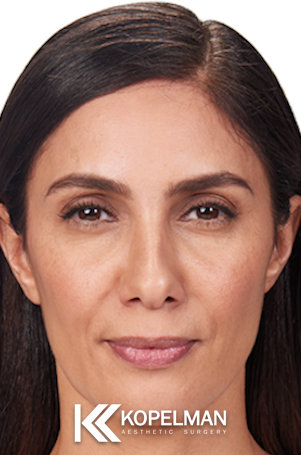
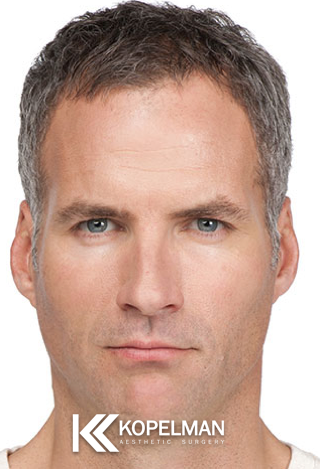
These Botox before-and-after pictures show actual patients treated at the practice. They will help you set realistic goals for your own outcome. Click on a patient to learn more about their Botox treatments in NYC.
“Dr. Kopelman is the best!! He is extremely genuine and has great bedside manner. I had Botox done recently and couldn’t be happier with the results! I am planning to go see him again soon.”
~ Lee Mor ~
Dr. Kopelman was one of the first physicians in the country to use Botox. He has been using it in clinical practice for close to thirty years and was designated as a national training site to instruct other physicians on how to inject it safely. He is a recognized expert in the field and has authored several original research papers demonstrating the treatment’s efficacy and safety.
For over thirty-five years, the surgeon has refined the most advanced techniques to address a wide range of cosmetic concerns. Choosing the best Botox in NYC ultimately comes down to the injector’s training, clinical experience, and eye for facial balance.
Dr. Kopelman was one of the first plastic surgeons in the U.S. to use Botox to help his patients decrease facial wrinkles and spasms.
A Botox procedure takes approximately 15 to 20 minutes, short enough to complete during a lunch break. To minimize discomfort, a topical lidocaine numbing cream is applied to the areas being treated. After about 10 minutes, a very fine needle is used to inject the product into the muscle groups that produce the overlying wrinkles.
After treatment, you can return to work or your daily activities right away. It takes roughly 48 to 72 hours for the results to set in, so do not expect an immediate change on the day of your appointment.
Because the treatment is not permanent, you can expect the benefits to last about 3 to 4 months. Every patient is different, but once the muscles begin contracting again, it is safe to schedule a new session. As a general rule, most patients maintain their results with treatment every two to three years. If you stop treatment, the wrinkles and creases will gradually reappear.
Forehead Lines
Eyebrow Lift
Crow’s Feet
Bunny Lines
Glabellar Lines
Chin Dimples
How does Botox work?
Botox inhibits facial muscle contractions which create overlying wrinkles and dimples.
Recommended number of Botox treatments?
Just one session is usually necessary for optimal results. Occasionally patients return within a week to reassure them that the Botox has treated all areas of concern.
What will I look like after a Botox treatment?
Your facial muscles will not be frozen. The remainder of your facial muscles will animate normally and you will have facial expressions that will appear natural. The elimination of frown lines and wrinkles will project a more positive image.
Is Botox safe?
Dr. Kopelman was one of the first physicians in the country to use Botox. In fact, he has been using clinical practice for close to thirty years and was designated as a national training site to instruct other physicians on how to inject Botox safely. Although Botox are all purified proteins called botulinum “toxin” these injections have been found to be very safe in millions of patients. The rare time that these medications were found to be unsafe was when the product was made as a“home-brew” and injected into a patient.
Botox has one of the longest safety records in aesthetic medicine and has been used in millions of patients. It is made from a purified protein produced by the bacterium Clostridium botulinum, and when administered by a trained, licensed injector, serious complications are rare. The rare cases where these products caused harm involved counterfeit or improperly handled material rather than treatment in a qualified medical setting.
Most side effects are mild and temporary. They can include minor bruising, redness, or swelling at the injection site, a short-lived headache, and, less commonly, temporary eyelid or brow drooping if the product migrates. These effects typically resolve on their own within days to a couple of weeks.
Botox is not recommended during pregnancy or breastfeeding, or for people with certain neuromuscular conditions. A thorough consultation helps confirm you are a good candidate before any treatment begins. For general background on botulinum toxin, the National Library of Medicine’s consumer resource is a reliable reference.
Beyond softening wrinkles, botulinum toxin is also used to reduce excessive underarm sweating, ease jaw tension and teeth grinding by relaxing the masseter muscle, and smooth prominent neck bands. If any of these con
Frequently asked questions
about Botox
Botox inhibits facial muscle contractions which create overlying wrinkles and dimples.
Just one session is usually necessary for optimal results. Occasionally patients return within a week to reassure them that the Botox has treated all areas of concern.
Your facial muscles will not be frozen. The remainder of your facial muscles will animate normally and you will have facial expressions that will appear natural. The elimination of frown lines and wrinkles will project a more positive image.
Dr. Kopelman was one of the first physicians in the country to use Botox. In fact, he has been using clinical practice for close to thirty years and was designated as a national training site to instruct other physicians on how to inject Botox safely. Although Botox are all purified proteins called botulinum “toxin” these injections have been found to be very safe in millions of patients. The rare time that these medications were found to be unsafe was when the product was made as a“home-brew” and injected into a patient.
Schedule a Consultation
For Botox Injections
To schedule a private consultation with Dr. Kopelman,
please call the office or request an appointment online.
Lorem ipsum dolor sit amet, consectetur adipiscing elit. Ut elit tellus, luctus nec ullamcorper mattis, pulvinar dapibus leo.